


In this episode, we explore insights from the book “Think Faster, Talk Smarter” by Matt Abrahams, highlighting how frameworks shape our communication and decision-making processes in everyday life.
At first glance, frameworks might evoke thoughts of rigid corporate structures or technical systems. However, frameworks are inherently part of our daily lives, often operating in the background. They serve as invisible structures that support our decisions and behaviors, much like the skeletal framework of a building that ensures stability. Without these frameworks, we would be overwhelmed by the complexities of life, forced to analyze every detail from scratch.
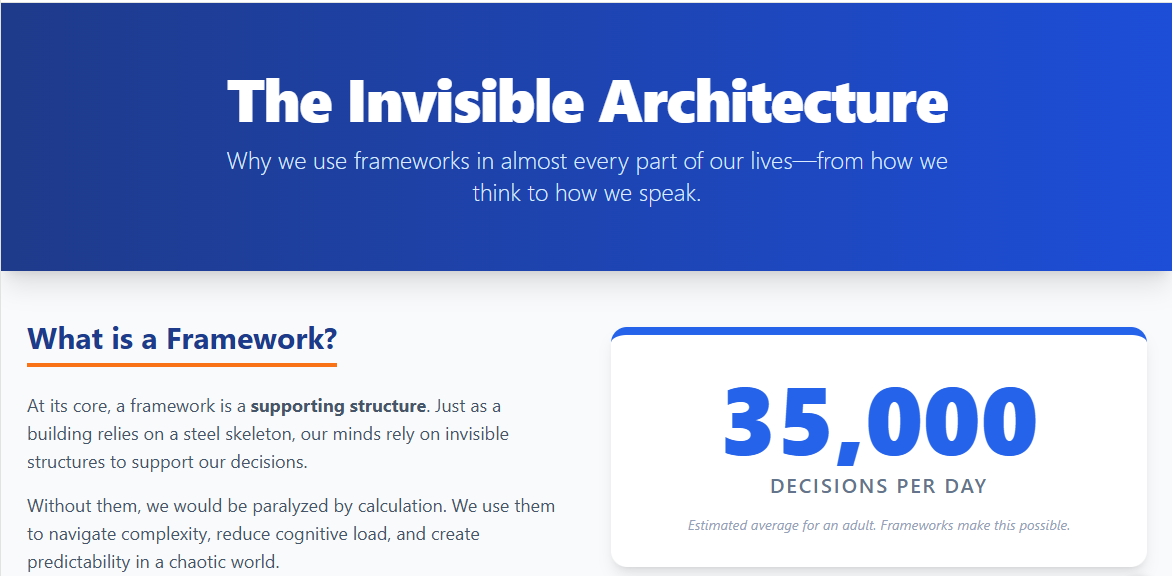
Our brains are naturally inclined to use mental shortcuts, known as heuristics, to navigate the world. For instance, when we see a stop sign while driving, we don’t consciously analyze its shape or color; instead, our pre-existing framework instantly informs us to stop. This cognitive efficiency allows us to focus on more complex tasks without unnecessary mental strain.
Beyond individual cognition, social frameworks dictate our interactions and behaviors within society. Paul highlights the unwritten social contracts that guide our conduct in everyday situations, such as waiting in line at a coffee shop. These frameworks foster predictability and harmony, ensuring that our interactions are smooth and conflict-free.
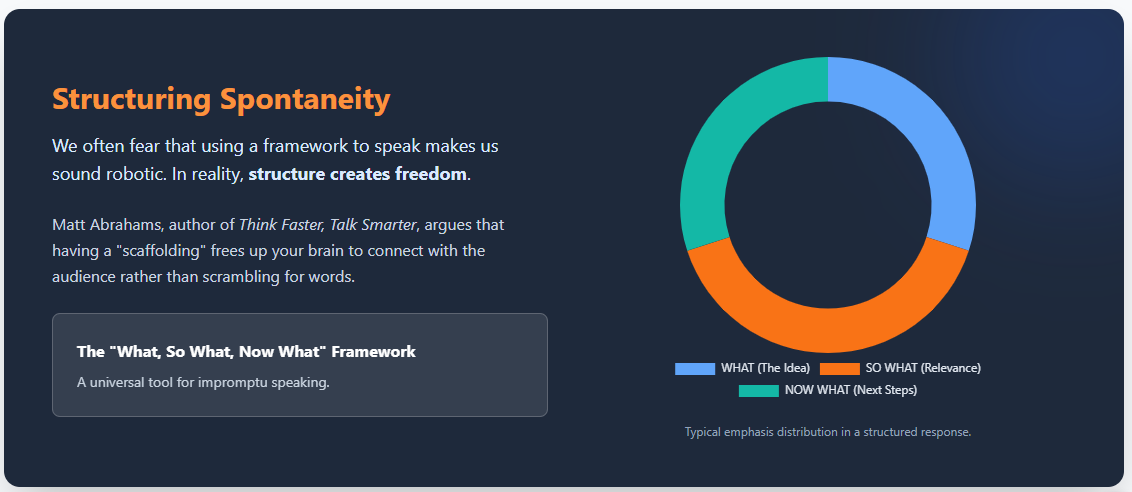
Despite their importance, many resist using communication frameworks due to a fear of sounding robotic or inauthentic. However, as emphasized in the podcast, structured frameworks can actually enhance spontaneity. By utilizing a framework, such as the “What, So What, Now What” model proposed by Matt Abrahams, speakers can maintain clarity and focus, freeing their mental energy to connect meaningfully with their audience.
The key takeaway is not whether you are using frameworks, but whether the frameworks you have in place are serving you well. If you feel stuck or unproductive, it may be time to reassess the frameworks you are relying on. Just as an architect must use the right blueprint to construct a building, you need to ensure that your frameworks align with your goals and aspirations.
Embracing frameworks can lead to greater clarity, efficiency, and creativity in both your communication and everyday life. By recognizing and evaluating the frameworks you use, you can unlock new pathways to success. Remember, frameworks are not just tools; they are essential structures that support your journey toward achieving your goals.


